[BY]
[Category]
[DATE]
Oct 1, 2023
At StoryStream, we're passionate about storytelling, and that passion extends to the stories we tell through our sustainable practices. In this blog, we're excited to share our commitment to eco-friendly video production, showcasing how we're reducing our environmental footprint while continuing to create captivating content.
Content
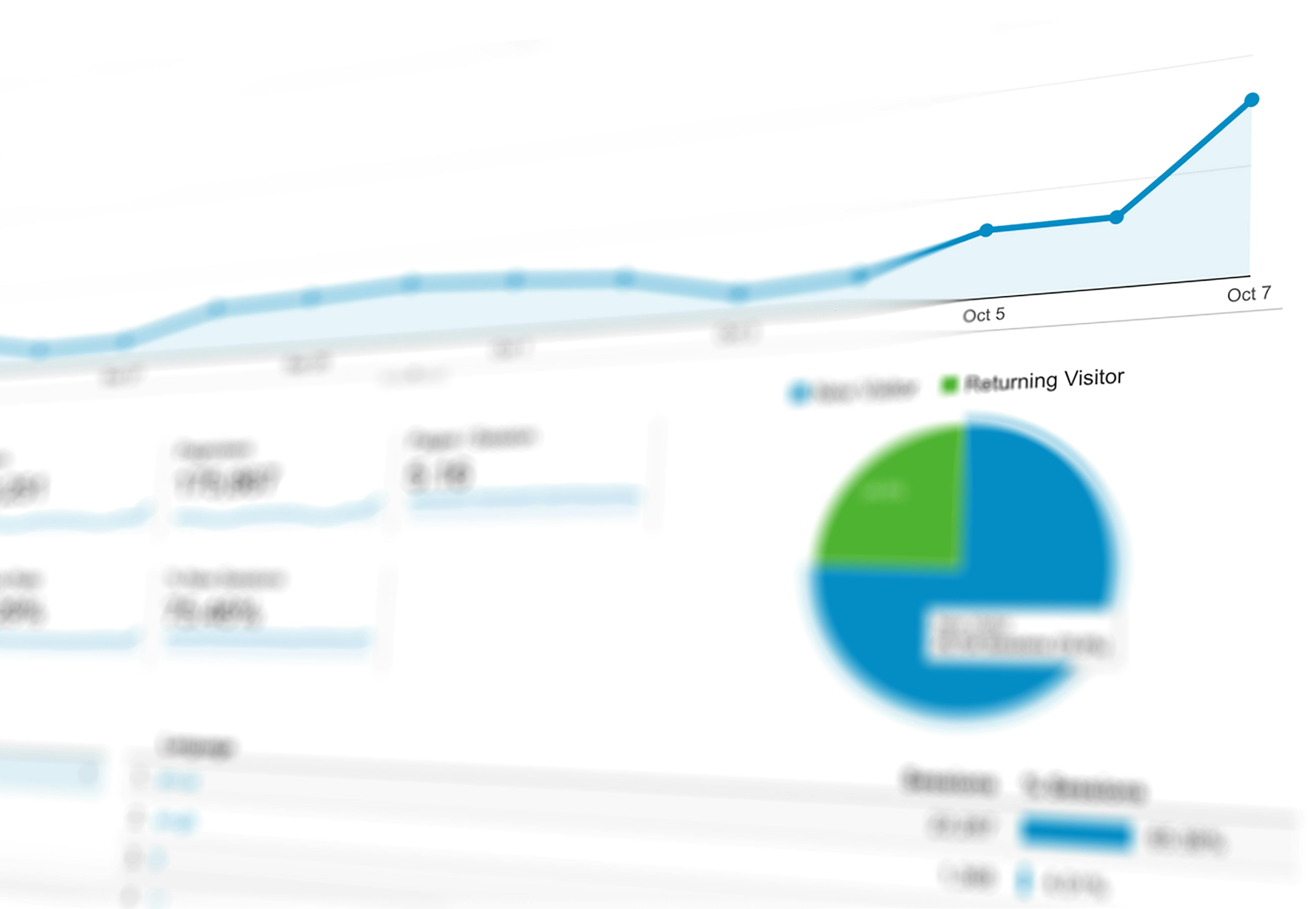
Likes are easy to get. Views are easy to inflate. Followers accumulate whether or not anyone is actually buying anything.
The problem isn't that these numbers are meaningless — it's that they're incomplete. They tell you that something happened, but not whether it mattered. And when marketing reports lead with vanity metrics, it becomes very difficult to have an honest conversation about what's actually working and where budget should go.
The brands that consistently outperform their competitors aren't the ones with the biggest follower counts. They're the ones that measure the right things, make decisions based on what the data is actually telling them, and continuously improve their marketing based on real commercial outcomes.
Here's how to think about marketing metrics properly — and which numbers deserve your attention.
The Problem With Vanity Metrics
Vanity metrics are numbers that look impressive but have a weak or non-existent connection to commercial outcomes. Likes, follows, impressions, video views, and reach all fall into this category — not because they're useless, but because they're frequently treated as endpoints when they're really just signals.
A post that gets ten thousand likes but generates zero enquiries has not performed well. A campaign that reaches a million people but moves none of them closer to a purchase has not been effective. An account that gains five hundred followers in a week but sees no corresponding increase in website traffic, leads, or sales has not grown in any commercially meaningful sense.
The danger of vanity metrics isn't just that they're misleading — it's that they're optimisable. Platforms are built to maximise engagement because engagement keeps people on the platform. What keeps people on the platform and what moves them toward buying your product are often quite different things. When you optimise for platform metrics, you're optimising for the platform's objectives, not your own.
This doesn't mean ignoring engagement entirely. Engagement signals content quality, audience relevance, and brand affinity — all of which matter. But engagement needs to be evaluated in context, alongside metrics that have a clearer line to commercial outcomes.
Engagement vs Conversion Metrics — Understanding the Difference
One of the most useful distinctions in marketing measurement is the difference between engagement metrics and conversion metrics.
Engagement metrics measure how people interact with your content or advertising — likes, comments, shares, saves, video completion rates, click-through rates. They're useful for evaluating creative quality, content resonance, and audience interest. High engagement relative to reach suggests the content is landing well with the people who see it. Low engagement suggests something in the content — the format, the message, the targeting — isn't connecting.
Conversion metrics measure whether people take a specific action that moves them through the funnel — visiting your website, signing up for an email list, requesting a quote, making a purchase, returning to buy again. These are the numbers with a direct line to revenue.
The relationship between engagement and conversion isn't always linear. High engagement doesn't guarantee high conversion, and sometimes low-engagement content converts exceptionally well because it's highly targeted at a bottom-of-funnel audience that's already motivated to act. Understanding which metrics apply to which stage of the funnel is what makes the difference between useful measurement and misleading measurement.
As a general principle: use engagement metrics to evaluate and improve creative work. Use conversion metrics to evaluate and improve commercial performance. And be very clear — in every brief, every campaign plan, and every performance review — about which type of metric is the right one to apply to each piece of activity.
The Metrics That Actually Matter
Here is a framework for thinking about marketing performance across the full funnel — from the earliest brand awareness moments through to long-term customer value.
Awareness and Reach Quality
Reach is a vanity metric. Reach quality is not.
Rather than asking how many people saw your content, ask what percentage of those people were actually in your target audience. A campaign that reaches fifty thousand precisely targeted people will almost always outperform one that reaches five hundred thousand broadly. Narrow reach to the right people, and engagement and conversion metrics improve dramatically as a consequence.
Share of voice measures how much of the conversation in your category your brand is capturing relative to competitors. It's a directional metric rather than a precise one, but it gives you a sense of whether your brand is growing in prominence or being drowned out.
Brand recall and recognition — measured through survey research or brand lift studies — tell you whether campaigns are actually lodging in the audience's memory. This is one of the few metrics that directly measures the effectiveness of brand advertising rather than performance advertising, and it tends to be underused relative to its strategic value.
Traffic and Intent
Website traffic as a raw number is a vanity metric. The questions that make it useful are: where is the traffic coming from, which channels are driving it, and what is that traffic doing when it arrives?
Traffic source breakdown matters enormously. Organic search traffic is earned and tends to indicate genuine interest. Direct traffic suggests brand recall and intent. Paid traffic is purchased and needs to be evaluated against conversion rates and cost. Social traffic is referral-based and varies significantly in quality depending on the platform and content type.
Time on site, pages visited, and bounce rate are imperfect but useful proxies for traffic quality. An audience that arrives, reads, explores, and spends time is more valuable than one that arrives and immediately leaves — regardless of what the raw traffic number looks like.
Search rankings and organic visibility matter significantly for long-term brand building. A brand that consistently ranks highly for the terms its target audience is searching becomes progressively more efficient over time — earning traffic without paying for it on every individual campaign.
Lead Generation and Pipeline
Cost per lead measures how efficiently a campaign is generating qualified enquiries. It's a useful metric for comparing channel performance and creative effectiveness, but it needs to be evaluated alongside lead quality — a low cost per lead from a poorly targeted campaign is not an efficiency win if those leads never convert.
Lead-to-opportunity rate and lead-to-customer rate measure the quality of the leads being generated. If a particular channel or campaign generates a high volume of leads that rarely convert, the cost per lead is misleading. The metric that matters is the cost per converted customer — which requires tracking the lead all the way through the pipeline.
Pipeline value and pipeline velocity — how much revenue is in the pipeline and how quickly it's moving toward close — are the metrics that connect marketing activity most directly to commercial outcomes. For B2B businesses in particular, these numbers are more useful than any engagement or traffic metric.
Conversion and Revenue
Conversion rate measures the percentage of people who take the desired action — the most direct measure of how well a campaign or asset is doing its job at a specific point in the funnel.
Conversion rates should always be evaluated in context. A one percent conversion rate on cold traffic to a brand awareness campaign is not directly comparable to a five percent conversion rate on a retargeting campaign targeting warm audiences. The benchmark depends entirely on the stage of the funnel and the audience's prior relationship with the brand.
Cost per acquisition (CPA) is one of the most valuable performance metrics available — the total cost of marketing and advertising activity divided by the number of customers acquired. It sets a clear limit on sustainable advertising spend and creates a direct link between marketing investment and commercial outcome.
Return on ad spend (ROAS) measures the revenue generated for every pound or dollar spent on advertising. It's a useful efficiency metric for performance campaigns, but it needs to be interpreted carefully — a high ROAS from a narrowly targeted campaign to existing customers is not the same thing as a high ROAS from a campaign that's genuinely acquiring new customers and growing the business.
Retention and Customer Lifetime Value
Customer lifetime value (CLV) is the total commercial value of a customer relationship over its full duration. It's one of the most important metrics in marketing and one of the least frequently measured — because it requires tracking customer behaviour over time rather than within a campaign window.
CLV puts customer acquisition costs in context. If a customer is worth five hundred pounds over their lifetime, a fifty-pound acquisition cost is efficient. If a customer churns after a single purchase worth sixty pounds, it's not.
Retention rate and churn rate measure whether customers stay or leave after the initial purchase. High acquisition combined with high churn suggests a fundamental mismatch between what the marketing promised and what the product delivered — a problem that no amount of advertising spend will fix.
Repeat purchase rate and upsell rate indicate whether customers are finding enough value to come back and buy more. These are among the clearest indicators of genuine customer satisfaction — and they feed directly back into CLV.
Brand Equity Metrics
Brand equity is the accumulated value of a brand's reputation, recognition, and association over time. It's harder to measure than performance metrics, but it's one of the most important indicators of a brand's long-term commercial health.
Net Promoter Score (NPS) measures the likelihood of customers recommending the brand to others. It's an imperfect metric — the methodology is contested and the scores aren't directly comparable across categories — but as a directional indicator of customer satisfaction and brand advocacy, it's widely used and useful.
Brand sentiment tracking — monitoring how the brand is talked about across social media, review platforms, and search — gives a qualitative sense of brand health that quantitative metrics can miss. A brand with improving sentiment is building equity. A brand with declining sentiment is eroding it, often before that erosion shows up in sales figures.
Share of search — how often people search for a brand name relative to competitors — is an increasingly valued proxy for brand strength. It's measurable, directional, and tends to correlate with market share movements over time.
How to Measure Marketing Success — A Practical Approach
Measuring marketing success properly requires three things that are frequently missing from marketing measurement frameworks.
First, clear objectives set before the activity begins. You cannot measure success against an objective that wasn't defined upfront. Every campaign should have a defined primary metric — the number that will be used to evaluate performance — agreed before a single asset is produced or a single pound of budget is spent.
Second, the right metrics for the right stage. Brand awareness campaigns should not be evaluated on conversion rate. Performance campaigns should not be evaluated on brand recall. Applying the wrong metrics to a piece of activity produces a false picture of its effectiveness — and leads to decisions that undermine both brand and performance in the long run.
Third, measurement that connects across the funnel. The most valuable insight comes not from measuring individual campaign metrics in isolation but from tracking how audiences move through the full funnel — from first awareness to conversion to retention. This requires a measurement framework that's built to track the same individual across multiple touchpoints over time, which is more technically complex but significantly more revealing.
For brands working with a creative agency on CGI visualisation and digital marketing campaigns — as many Third Door Studios clients do — this means ensuring the measurement framework is established before the campaign launches, not retrofitted after the fact. The metrics that will be used to evaluate the campaign should inform how the campaign is structured, what creative assets are produced, and how the media plan is built.
How Creative Quality Affects Marketing Metrics
One connection that's frequently overlooked in marketing measurement discussions is the relationship between creative quality and performance metrics. Better creative produces better metrics — not just engagement metrics, but conversion metrics, CPA, and ROAS.
This happens for several reasons. High-quality creative is more distinctive and therefore more memorable, which improves brand recall and recognition over time. It's more relevant and resonant, which improves click-through and conversion rates. It's more shareable, which extends reach without additional cost. And it communicates brand quality more effectively, which improves the conversion rate of warm audiences who arrive at the website or point of sale after seeing the ad.
For brands investing in CGI visualisation in particular, the creative quality argument is especially strong. A CGI product render that showcases the product with extraordinary detail, precision, and visual appeal communicates value and desirability in a way that a standard product photograph often doesn't — and that difference shows up in the performance metrics.
Measuring creative quality as a variable in campaign performance — comparing results across different creative approaches, not just different audience segments or bid strategies — is one of the most productive and underutilised approaches in marketing analytics.
Frequently Asked Questions
What are vanity metrics in marketing?
Vanity metrics are numbers that look impressive but have a weak connection to commercial outcomes. Likes, followers, impressions, and raw video views are the most common examples. They're not entirely meaningless — engagement signals content quality and audience relevance — but they become vanity metrics when treated as endpoints rather than signals. A metric is vanity when it can be high without the business being better off. The test is always: does this number have a clear line to revenue or business growth?
What marketing metrics actually matter?
The metrics that matter most depend on the stage of the funnel and the objective of the activity. For awareness campaigns: reach quality, brand recall, and share of voice. For consideration and intent: traffic quality, time on site, and search visibility. For conversion: conversion rate, cost per acquisition, and return on ad spend. For retention: customer lifetime value, repeat purchase rate, and churn rate. For brand health: NPS, brand sentiment, and share of search. No single metric tells the full story — the most useful picture comes from tracking a small number of the right metrics across the full funnel.
What is the difference between engagement metrics and conversion metrics?
Engagement metrics measure how people interact with content or advertising — likes, comments, shares, saves, click-through rates, video completion rates. They're useful for evaluating creative quality and content relevance. Conversion metrics measure whether people take a specific action that moves them through the funnel — website visits, sign-ups, purchases, repeat purchases. They have a more direct line to commercial outcomes. Both matter, but they answer different questions and should be applied to different types of activity.
How do you measure marketing success beyond social media?
Measuring marketing success beyond social media means tracking performance across the full customer journey — from first awareness through to retention and advocacy. This includes organic search visibility and rankings, website traffic quality and behaviour, lead generation and pipeline metrics, conversion rates and cost per acquisition, customer lifetime value, and brand equity indicators like NPS and share of search. The goal is a measurement framework that connects marketing activity to commercial outcomes, not just platform engagement.
What are brand performance metrics?
Brand performance metrics measure the health and strength of a brand over time, rather than the short-term performance of individual campaigns. They include brand awareness and recognition, brand recall, brand sentiment and association, share of voice in the category, net promoter score, share of search, and customer lifetime value. These metrics are harder to measure than direct response metrics but are critical indicators of long-term commercial health. Brands that invest in measuring brand performance are better positioned to make the case for brand investment and to spot equity erosion before it shows up in sales figures.
How does creative quality affect marketing performance metrics?
Creative quality has a significant and direct effect on marketing performance metrics. Higher-quality creative improves brand recall and recognition, increases click-through and conversion rates, lowers cost per acquisition, and improves return on ad spend. The mechanism is straightforward: creative that is more distinctive, more relevant, and more visually compelling performs better at every stage of the funnel. For brands investing in CGI visualisation, high-quality renders communicate product value and brand premium in ways that translate directly into improved conversion metrics — because the creative is doing more work at the point of decision.